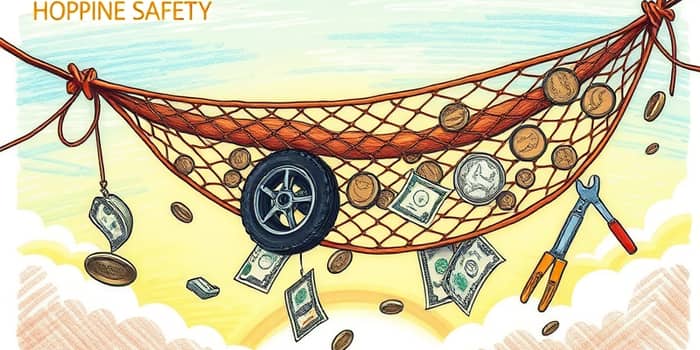
Life’s twists and turns can leave even the most careful planner off balance. Without a solid plan to weather storms, a single unexpected expense can trigger stress, hasty decisions, and long-term setbacks. This article guides you through establishing a robust financial buffer—your personal safety net that safeguards dreams and empowers strategic choices, even when challenges arise.
A financial buffer is a dedicated pool of accessible funds set aside exclusively for emergencies or temporary income disruptions. It serves to serve as a personal shock absorber, giving you time and space to respond thoughtfully rather than react out of desperation.
To be effective, your buffer must be a liquid and easily accessible reserve, yet kept separate from everyday spending accounts. This separation creates a psychological barrier, helping you resist non-essential withdrawals and preserve the buffer for genuine needs.
By securing this foundation, you build a stable psychological and financial base that allows you to embrace sustainability, long-term planning, and values-driven choices, even when life throws curveballs.
A well-structured buffer uses a tiered approach to address shocks of varying scale. Below is a simple breakdown of each tier and its target funding amounts:
Tier 1 offers rapid relief for small shocks. Tier 2 protects you during job searches or medical leaves. Tier 3 grants freedom to pursue major life changes without jeopardizing your livelihood.
Having a buffer frees your mind from constant financial worry, letting you focus on personal development or ethical investments. By decoupling of income and consumption, you gain the freedom to explore new careers, educational paths, or volunteer work without immediate financial penalties. Moreover, directing funds toward community resources or repair skills builds investment in resilience capital, strengthening both personal and local ecosystems.
Begin by auditing your spending to determine how much you need for each tier. Next, set up automatic contributions—no matter how small—to build momentum. Placing your funds in a distinct account, such as an online savings tool, creates a clear boundary between daily budgets and emergency reserves.
Consider adjusting contributions after major life events, such as a new job, the birth of a child, or a move, to maintain the buffer’s relevance and adequacy over time.
Organizations benefit from buffers just as individuals do. A robust cash reserve simplifies financial management and growth, providing a runway for strategic investments or unexpected downturns. It reduces reliance on high-interest loans, fosters a stable payroll cycle, and builds stakeholder confidence.
At the community level, shared emergency funds, co-op resources, or mutual-aid networks act as collective buffers. These systems alleviate pressure on public safety nets and can catalyze grassroots resilience—especially in regions underserved by traditional support programs.
Beyond personal finance, government programs like SNAP, TANF, and Medicaid constitute broad social buffers. Studies show that increasing participation in these programs reduces hardships and food insufficiency, cutting the poverty gap by up to 45%. Globally, safety nets assist some 2.5 billion people, with 36% of the poorest escaping extreme poverty thanks to these protections.
However, millions remain unserved by official safety nets, particularly in low-income countries. Advocating for inclusive policy reforms—like relaxing asset limits on benefits—can extend this shield to vulnerable populations and foster equitable resilience worldwide.
Establishing a financial buffer is more than mere savings; it’s a commitment to autonomy, peace of mind, and values-driven living. By methodically building your three-tier defense, automating contributions, and leveraging both personal and communal safety nets, you cultivate a foundation that empowers wise choices under any circumstance.
Your financial buffer lets you navigate uncertainty with confidence, uphold your principles, and invest in lasting well-being. Start today, and transform every surprise into an opportunity for growth rather than a crisis to fear.
References