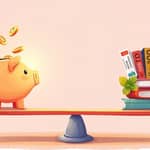
In an era of market uncertainty, one investment stands out as undeniably reliable: you. By shifting focus to personal growth, you can achieve returns that far exceed even the best financial benchmarks.
While stocks, bonds, and real estate remain popular, they depend on forces beyond your control. In contrast, self-investment leverages your own time, energy, and resources to amplify your earning power and resilience.
Your greatest asset is not what’s in your brokerage account, but the present value of your future earnings. Economists call this your human capital—essentially the sum total of all the skills, knowledge, and relationships that generate income.
Financial capital—the money you invest in markets—compounds on top of your human capital. The more you earn, the more you can save and invest, creating a cycle of growth far more potent than relying on markets alone.
Consider this: a college graduate in the United States typically earns 60–80% more over a lifetime than a high-school graduate. That premium equates to hundreds of thousands of dollars, akin to purchasing a high-yield asset that pays out for decades.
Upskilling through certificates, bootcamps, or advanced degrees can produce even larger dividends. For example, someone earning $50,000 per year who invests $2,000 in a coding bootcamp and secures a $60,000 salary within two years gains an extra $10,000 annually. Over ten years, that’s $100,000 additional income for a one-time cost of $2,000.
That implied return on personal skills dwarfs the mid-single-digit forecasts for traditional assets, demonstrating why education is often the best purchase you’ll ever make.
Good health extends your productive years, reduces medical expenses, and boosts daily performance. Investments in exercise, nutrition, and sleep are not just lifestyle choices but economic assets that compound over time.
By treating health as a strategic investment, you lower absenteeism, enhance cognitive function, and maintain the stamina needed to pursue side ventures or promotions. These dividends accrue over decades, often escaping the volatility of financial markets.
Just as reinvesting dividends fuels portfolio growth, reinvesting the returns from your skills and health magnifies your trajectory. Every raise or business opportunity unlocked can be poured back into new courses, coaches, or wellness programs.
Over time, this virtuous cycle builds a form of financial security that remains robust even when markets wobble. Your personal portfolio of skills, health, and connections becomes non-correlated with market cycles.
There are four key reasons that personal growth often outperforms traditional investments:
Unlike the uncertainty of geopolitical events or inflation, your effort, discipline, and choices determine the outcomes of self-investment.
Ready to begin? Follow these actionable steps to build your human capital portfolio:
Track your progress by measuring increases in income, reductions in sick days, and the size of your professional network. Just like monitoring a stock portfolio, this data-driven approach ensures you stay on the path of continuous self-improvement.
In a world where retirement assets total over $45.8 trillion, many individuals still struggle to find savings for emergencies or home down payments. By elevating your earning potential and financial literacy, you position yourself to not only participate in these markets, but to thrive within them.
Investing in yourself isn’t a luxury—it’s the ultimate financial strategy. When you control the levers of your own growth, you unlock returns that far outpace any external market. Start today, and watch as your skills, health, and relationships compound into the most powerful portfolio you’ll ever own.
References