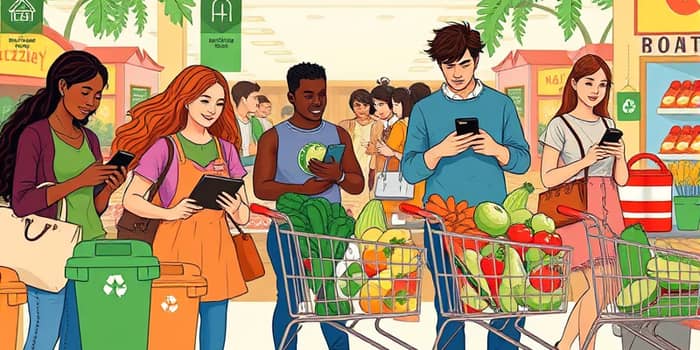
In 2025, global commerce is more dynamic than ever, and consumers wield unprecedented power to influence markets. As eCommerce sales near $6.86 trillion globally in 2025, the choices we make ripple across supply chains and the environment. By embracing a strategy that balances smart purchasing with sustainability, shoppers can unlock savings while driving positive change.
Over 2.54 billion people are expected to shop online this year, a significant jump from 2.33 billion in 2023. Mobile commerce alone will account for $3.2 trillion in sales, powered by smartphones driving more than 60% of purchases. Yet, the average cart abandonment rate of 69.8% highlights a massive opportunity: with careful planning, shoppers can overcome impulse buys and focus on genuine needs.
One in four consumers now traverses borders to buy unique goods, with Asia-Pacific and Europe leading international order volume. Meanwhile, social commerce rockets toward $1.2 trillion, as 60% of Gen Z discovers products through TikTok, Instagram, or YouTube. Subscription models are booming too, projected to reach $38 billion worldwide by the end of the year in categories like specialty foods, personal care, and pet supplies.
Artificial intelligence is transforming shopping from guesswork into precision art. Today, 66% of weekly shoppers use AI assistants to guide decisions, while 58% of Gen Z already rely on smart recommendation engines. Hyper-personalization influences over 50% of online purchases, as AI analyzes past behavior to surface items that truly match individual tastes and budgets.
Imagine saying, “Here’s my budget and preferred stores,” and receiving a curated meal plan with an optimized shopping list for the week. That’s no longer science fiction. AI-driven apps create smart shopping lists by category, suggest the best deals in real time, and even flag products nearing expiration to minimize waste.
Chatbots handle 44% of customer service interactions, prized for their speed and 24/7 availability. And with the retail automation market expected to hit $23.58 billion by year’s end, emerging tools like voice assistants and AR fitting rooms will continue refining the shopping experience.
While shopping habits evolve, a sobering truth remains: nearly one-third of all food produced globally is lost or wasted. In the United States alone, 30-40% of the food supply goes uneaten each year, equating to almost 60 million tons of discarded food. Consumers collectively spend $261 billion on meals that never make it to our plates.
Of that wasted food, 30% ends up in landfills, creating methane emissions that exacerbate climate change. Meanwhile, 23% is never harvested, and only 19% is composted. Alarmingly, two-thirds to 75% of wasted food is perfectly edible, highlighting a massive inefficiency in the system.
Today’s consumers are more conscientious than ever. 91% prefer brands that actively reduce waste, and 68% are drawn to sustainable packaging. Yet 60% believe businesses must do more to address food waste, while 57% express disappointment at current efforts.
Policy initiatives are stepping in to bridge the gap. California’s AB 660 standardized date labels—distinguishing “USE By” for safety and “BEST If Used By” for quality—to clear up consumer confusion. Curbside composting, now available in key U.S. cities, diverted over 35,000 tons of food waste from landfills last year. Investment in waste solutions reached $11.2 million in 2025, signaling growing corporate interest.
Augmented reality shopping is also on the rise, expanding by over 40% year-over-year in fashion, beauty, and home goods. These innovative tools not only enhance the shopping experience but encourage mindful consumption by visualizing product lifecycles and disposal impacts.
To thrive in this dynamic landscape, consumers can adopt several practical strategies:
Savvy shopping in 2025 is more than chasing bargains—it’s about making choices that amplify value while safeguarding the planet. Collaboration among consumers, businesses, and policymakers is essential. Together, we can harness technology and informed decision-making to drive down waste, lower costs, and build a more sustainable future.
By embracing personalized AI-powered recommendations, supporting brands dedicated to zero waste, and integrating simple habits like meal planning and composting into daily routines, every shopper becomes an agent of change. Let us transform spending into an act of stewardship—shopping not just for today, but for generations to come.
References