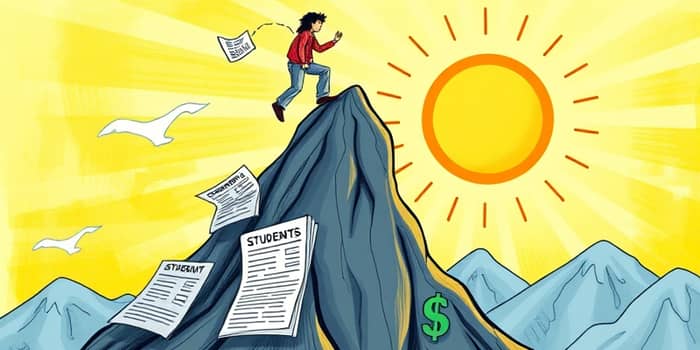
Student debt can feel like an insurmountable mountain. With the right tools and mindset, you can transform anxiety into empowerment and take charge of your financial future.
In 2025, Americans owe roughly $1.81 trillion in total student loan debt, with about 42.4 million federal borrowers shouldering an average of $39,200 per borrower. While the median debt is lower—between $20,000 and $24,999—many carry balances above six figures.
Delinquency rates reached 11.3% in mid-2025, illustrating how widespread and urgent this challenge has become. This crisis spans generations: more than half of borrowers are over 35, and one in five is over 50. Whether you’re fresh out of school or rebuilding mid-career, understanding the stakes is the first step toward relief.
Before tackling repayment, it’s vital to distinguish the two main loan categories: federal and private. They come with distinct terms, protections, and relief options.
Federal loans boast features like fixed interest rates set annually, income-driven repayment plans, deferment, and discharge for death or disability. Private lenders offer limited forbearance at their discretion, with no access to federal forgiveness programs.
Choosing the right repayment strategy can reduce stress and save thousands in interest. Here are the primary options:
The true game-changer is income-driven repayment (IDR). These plans cap payments at a portion of your discretionary income and forgive any remaining balance after 20–25 years of qualifying payments.
Starting July 2026, new borrowers will transition to a proposed Repayment Assistance Plan (RAP), which calculates payments on gross income and extends forgiveness to 30 years. Existing IDR participants can remain until mid-2028 before migrating to RAP.
Beyond IDR, several specialized programs can erase or reduce balances more rapidly:
Under the American Rescue Plan, any IDR forgiveness granted through 2025 is federally tax-free through the end of 2025, potentially saving borrowers thousands more.
Mastering repayment requires more than choosing a plan—it demands disciplined habits and resourceful tactics. Consider these approaches:
Regularly recertify your income for IDR plans to prevent payment spikes and unwanted capitalized interest. Stay informed about policy changes—pending regulations may affect forgiveness timelines and eligibility criteria.
Conquering student debt is a marathon, not a sprint. With knowledge, persistence, and a clear plan, you can transform a heavy burden into a source of strength and financial resilience. Every payment, every strategy, and every informed decision brings you closer to freedom. Let this guide be your roadmap: stay committed, stay informed, and stay hopeful. Your journey toward debt-free living and financial empowerment starts today.
References