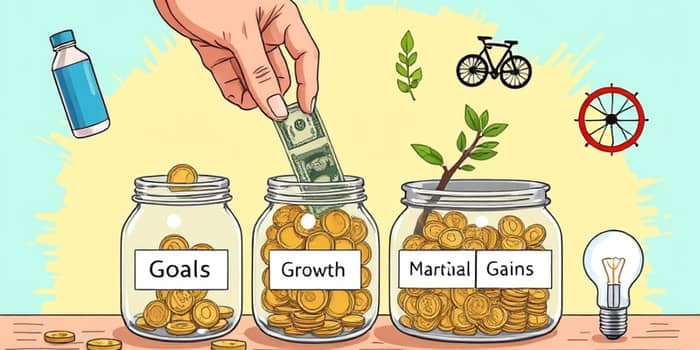
Saving money often feels overwhelming when we focus on grand gestures. Yet it’s not about cutting everything, but mastering tiny, consistent improvements over time. By reframing saving as an art—built on psychology, finance mechanics, and broader parallels—we unlock the power of marginal gains and compounding effects. These small steps become the stepping stones to long-term financial resilience.
At the heart of this approach lies the 1% rule and rule of marginal gains. Popularized in sports and performance science, it shows that dozens of minor tweaks can lead to remarkable transformations. Consider the British Cycling team under Sir Dave Brailsford: by refining bike seats, warm-up routines, even hand-washing protocols, they went from obscurity to winning five Tour de France titles within a decade.
This same principle applies to money. A single plastic bottle avoided seems trivial, but switch permanently to reusable bottles and you save hundreds of kilos of plastic—and hundreds of dollars—over the years. Similarly, saving small recurring amounts plus time and interest yields outsized balances in your accounts.
Before you accelerate growth, gain awareness. People who track every expense typically increase their savings rate by 10–20% simply through heightened intentionality. Many discover invisible hundreds in unused subscriptions or impulse buys.
Beyond tracking, adopt the principle to pay yourself first. By directing a portion of each paycheck to savings or investments before bills, you turn saving into a default habit. Data shows those who automate typically save three to ten times more than manual savers.
An emergency buffer isn’t luxury—it’s essential for peace of mind. In 2024, 55% of U.S. adults reported having at least three months of expenses set aside. Vanguard research highlights that even $2,000 in savings can markedly reduce financial stress and prevent high-interest debt spirals.
Starting small matters. FDIC guidance stresses that tiny recurring transfers build substantial rainy-day funds over time, turning a fragile budget into a resilient one.
Often, we lose more through unnoticed leaks than dramatic overspending. Trimming these can free up hundreds annually without pain.
For instance, skipping a $1 candy bar each day costs $365 per year. Invested at a 5% annual return, that same amount could grow to nearly $973 in two decades.
*Assumes 5% annual return; **Assumes 6% annual growth over 40 years
Applying marginal gains to debt can save substantial interest. Imagine a $5,000 credit card balance at 18% APR. Paying just $50 extra monthly accelerates payoff by months and saves thousands in interest, freeing up future cash flow.
On retirement, small increases pack enormous punch. A person earning $50,000 who boosts contributions from 3% to 5% adds $1,000 yearly. Thanks to tax savings, net take-home pay dips by only about $65 per month. Over 40 years at a 6% return, this extra 2% can grow to roughly $850,000.
True saving mastery relies on systems, not willpower. Remove friction and embed defaults that favor your goals.
Frameworks like these show why small nudges—highlighting a higher retirement rate in a paycheck email, for instance—can boost contributions by nearly 3% of income for that period.
Behavioral change isn’t unique to money. Research in ASEAN highlights that shifting daily energy habits can reduce demand by 10–25%. During COVID-19 lockdowns, energy intensity fell over 26%. These shifts mirror how intentional tweaks in your finances compound over time.
Both domains teach that systems and cues outperform brute discipline. Just as turning off unused lights saves watts, automating savings secures dollars.
The art of saving is less about sacrifice and more about strategy. By embracing small recurring amounts and interest, harnessing high-leverage behavioral change for savings, and deploying right financial defaults and cues, you transform marginal actions into meaningful wealth. Each small step becomes a building block for a stable, empowered financial future.
References