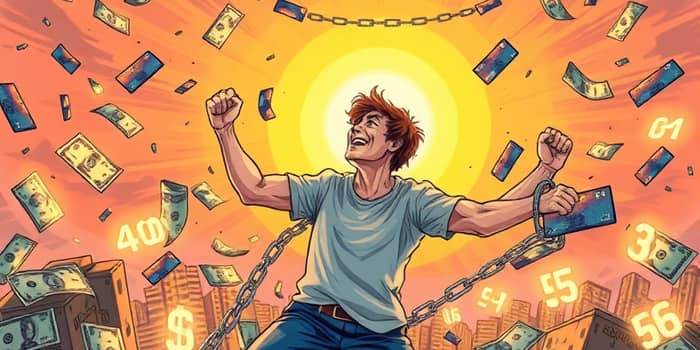
Debt can feel like an unbreakable bond, weighing on your mind and heart. Yet, with knowledge, strategy, and persistence, you can transform those chains into stepping stones toward lasting financial liberation.
In this article, we explore proven methods to assess your debts, craft a personalized repayment strategy, and leverage structural tools to reclaim your future.
Before you can escape, you must first map every link in your financial chain. Gather details on each obligation—credit cards, personal loans, auto loans, mortgages, and student debt. Recognize the difference between good low-interest debt and toxic high-interest revolving debt.
Use this moment to shine a light on warning signs that your finances are in peril:
With this assessment, you’ll see each chain link clearly and begin to formulate a plan for breaking free.
Choosing the right approach can dramatically influence both your progress and motivation. Three DIY methods stand out:
Example: With $10,000 at 24% APR and $2,000 at 19% APR, the avalanche saves the most interest, while the snowball builds powerful emotional momentum.
Repayment requires a steady stream of extra cash flow. A realistic budget forms the backbone of your escape.
Begin by tracking spending for 1–3 months and categorize expenses using the 50-30-20 rule: 50% needs, 30% wants, 20% savings or debt payoff. Then, shift discretionary spending toward your debt escape fund.
Meanwhile, establish a small starter emergency fund of $500–$1,000 to prevent new debts when unexpected expenses arise.
In high-inflation periods, prioritize essential expenses and consider temporary downsizing—cheaper housing, roommates, or renegotiated bills—to maintain momentum.
For many, DIY strategies lay the groundwork, but structural tools can accelerate the journey.
Combine multiple debts into one loan with a potentially lower interest rate and simplified monthly payment. Options include personal loans, home equity lines, or balance transfer credit cards.
Pros: Reduced interest, streamlined payments, and faster payoff if the term is manageable. Cons: Fees, risk of renewed spending, and possibly longer repayment periods.
Nonprofit credit counseling agencies can negotiate lower rates and fees, consolidating your payments into one monthly payment. Typical durations range from 3–5 years, making budgets predictable and stress levels drop.
Success hinges on early enrollment—ideally before accounts become seriously delinquent—and commitment to closing enrolled credit lines.
For unsecured debts, negotiating with creditors to accept less than the full balance may provide relief when other strategies falter. However, settlement carries significant risks: late fees, credit-score damage, and potential tax consequences.
Below is a snapshot of common settlement outcomes based on industry data:
Consider refinancing mortgages or auto loans if rates drop, and leverage balance transfers for credit cards to move high-interest balances onto 0% promotional offers. Always weigh fees and promotional deadlines carefully.
Escaping debt is not a single act but a journey of self-discovery, discipline, and resilience. By diagnosing your chains, selecting a tailored repayment method, and employing structural tools, you can chart a course toward long-term peace of mind.
Remember, every payment, however small, is a chisel strike against your financial chains. Stay focused, celebrate milestones, and soon you will stand free, empowered by the lessons learned along the way.
References