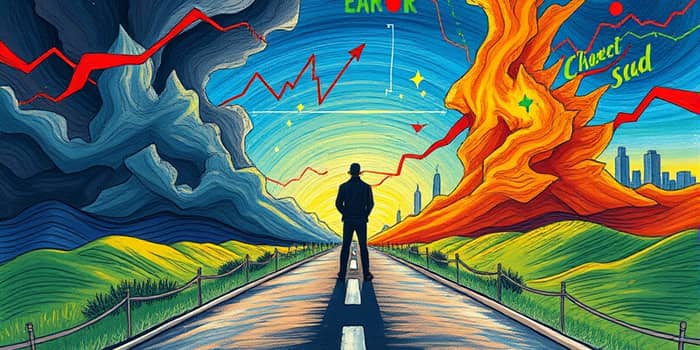
Investing success is less about picking the hottest stocks and more about mastering your own emotions. When markets swing wildly, it’s not fundamentals alone that steer prices—it’s the dual forces of fear and greed. In this article, we explore why emotional discipline and mindset often create the true edge for investors, big and small.
Our journey unfolds in three pillars: defining fear and greed in investing contexts, exploring how these emotions drive market cycles, and offering practical frameworks to manage them. By the end, you’ll have actionable tools to stay steady when others panic and to resist overzealous buying sprees.
Fear and greed are universal human emotions, yet in markets they manifest in specific, costly ways. Fear pushes investors to avoid or minimize losses, sometimes irrationally. Greed tempts them into excessive risk and speculative bubbles. Grasping these emotions is the first step toward conquering their influence.
Fear in investing often shows up as:
Greed can be even more seductive, leading to:
When enough participants act on fear or greed, they create self-reinforcing cycles that drive prices far beyond rational values. Markets rise on a wave of greed, then crash under a tide of fear. Understanding this cycle helps you anticipate extremes and act with clarity.
This pattern repeats in bull and bear markets, amplified by hard-wired biases amplify fear and greed such as confirmation bias and recency bias. Recognizing where you stand can prevent emotional overreactions.
Real-world examples bring theory to life. The 2008 Global Financial Crisis saw the Fear and Greed Index plunge to near zero. Investors, gripped by panic, sold at rock-bottom prices and missed the powerful rebound that followed. Loss aversion forced many to lock in crippling losses.
Contrast that with the Dot-com Bubble of 1999–2000, when greed surged the Index above ninety. Tech stocks soared into the stratosphere on the belief that profits were limitless. When the bubble burst, late entrants suffered losses that took years to recover.
In March 2020, the COVID-19 Crash showed both extremes in rapid succession. The S&P 500 fell over thirty percent in weeks, then rebounded swiftly thanks to massive stimulus. Investors who sold in panic missed one of the fastest recoveries ever, illustrating the cost of premature selling and excessive caution.
Even cryptocurrencies have their tales—2017’s Bitcoin boom was fueled by extreme greed. The crypto Fear and Greed Index hit highs, as new investors poured in without understanding the risks. When values collapsed in 2018, many realized losses far beyond what they ever gained.
Emotional mastery comes from practical habits and frameworks that inoculate you against extremes. Here are proven tools to build resilience and rationality into your investing:
By turning these frameworks into habits, you shift from reactive to deliberate decision-making. The goal is not to eliminate fear or greed but to channel them into disciplined action.
Markets will always test your resolve. Price swings, headlines, and social media hype are designed to provoke emotional reactions. Yet, the most successful investors consistently demonstrate one trait: the ability to stay calm when others panic and to remain cautious when others charge ahead.
Developing this mindset takes time and self-awareness. Start by monitoring your emotional state, perhaps using a simple journal. Pair that with quantitative tools like the CNN Fear & Greed Index and the VIX to ground your feelings in data.
Ultimately, conquering fear and greed isn’t a one-time event—it’s a lifelong practice. By understanding these emotions, observing market cycles, and applying robust frameworks, you build the resilience to thrive, not just survive, through every market turn.
References