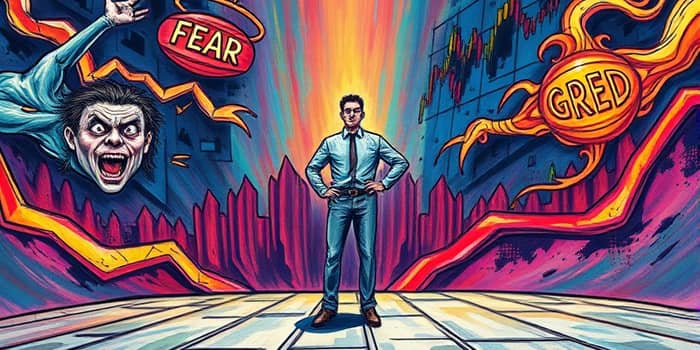
Emotions often steer investors away from logic. In this article, we investigate how emotional biases impact investment decisions and share strategies to achieve better outcomes.
Traditional finance models like the Efficient Market Hypothesis assume that markets and investors act with perfect rationality. Yet reality tells a different story.
Behavioral finance reveals that emotions and heuristics rather than careful analysis frequently drive decisions, leading to results that deviate from theoretical expectations.
Key takeaway: Many investors, especially individuals, rely on intuition over data, exposing them to hidden risks.
Overconfidence occurs when investors overestimate their knowledge or skill, underplaying the likelihood of unexpected outcomes.
Definition and mechanisms:
Investors may believe they can time the market or pick winners consistently. This leads to
One study found that 64% of investors believe they have a high level of investment knowledge, illustrating how widespread this bias is.
Consequences include tax drag from frequent trades, overconcentrated portfolios, and larger losses during downturns.
Loss aversion refers to the tendency where the pain of a loss is felt more intensely than the pleasure of an equivalent gain.
Behavioral patterns include panic selling during market dips and holding losing investments to avoid realizing a loss.
Investors often cling to underperforming assets long past rational exit points, leading to crystallized losses when market sentiment finally turns.
Fear of missing out during rallies drives many to buy assets solely because they are popular, ignoring fundamentals.
Herd mentality manifests as:
Buying at peaks when optimism is rampant; selling at lows in the grip of panic. Research shows about 5% of informed investors can sway the decisions of the remaining 95%, creating powerful cascades.
Historical examples include the dot-com bubble, where euphoria propelled valuations skyward until the NASDAQ plunged nearly 80%, wiping out trillions in value.
Confirmation bias leads investors to seek information that supports their existing beliefs, ignoring contrary evidence.
Manifestations include reading only bullish reports on a favorite stock and dismissing negative data, creating an echo chamber that perpetuates poor decisions.
Failure to adjust when fundamentals change can result in holding overvalued or deteriorating positions far too long.
Relying too heavily on the first piece of information—the anchor—prevents investors from fully integrating new data.
Common anchors are purchase prices or prior highs, leading to the belief that the asset must return to that level despite shifting realities.
This bias can cause investors to miss better opportunities or cling to losing positions in the hope of a comeback.
Beyond the major biases, several under-studied influences affect decisions:
Investor sentiment typically follows a predictable arc, fueling booms and busts:
This cycle shows how bubbles form and burst when emotional extremes override rational planning.
Confronting biases begins with disciplined habits and systems that reduce emotional interference.
Implementing these steps helps cultivate a more rational, resilient investor mindset capable of weathering market storms.
By understanding the psychological drivers behind poor investment choices and adopting structured strategies, investors can align their actions with long-term goals rather than fleeting emotions. The journey to mastery begins with awareness and builds through practice, ultimately transforming the way you engage with markets.
References