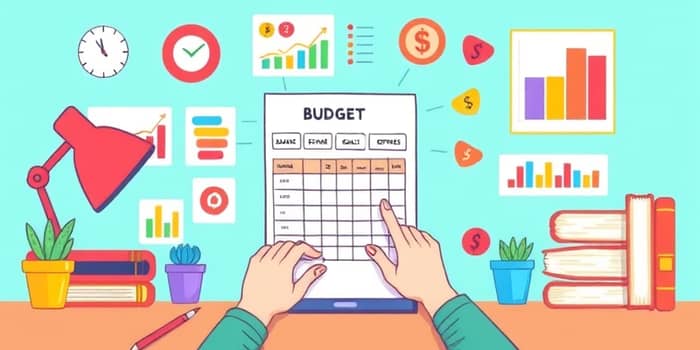
In today’s fast-paced world, managing money can feel overwhelming. The one-page budget offers a streamlined path to clarity and control, allowing you to focus on what really matters: building a secure financial future.
By reducing complexity and keeping all essentials on a single sheet, this approach transforms budgeting from a chore into an empowering ritual.
A one-page budget is more than a template—it’s a philosophy. It embodies a minimalist approach to financial planning that makes every dollar count.
Rather than drowning in spreadsheets and categories, you capture your entire month’s finances at a glance. This method helps you spot opportunities to save or redirect funds toward meaningful goals.
Tracking every income source ensures no dollar goes unaccounted for, giving you a clear view of your resources.
A visually clean design is crucial. Embrace a complete financial picture at a glance with clear sections for projected, actual, and variance amounts.
Use color-coded fields or subtle shading to distinguish:
Columns and charts simplify comparisons, while built-in formulas handle the math, freeing your mind for strategy rather than calculation.
Breaking down expenses into clear categories helps you pinpoint where adjustments are needed. Separate costs into fixed and variable groups for deeper insight.
Common expense categories include:
Label fixed costs that recur consistently each month, then track variable costs to uncover spending patterns and areas for potential cuts.
Embedding savings targets directly on your one-page budget turns dreams into actionable plans. Allocate funds before spending to prioritize wealth building.
By treating savings as a fixed line item, you remain committed to your goals and resist the temptation to overspend.
Your personal style will dictate which budget philosophy works best. Two popular methods shine on a one-page layout.
The 50/30/20 rule splits income into needs, wants, and savings. It ensures you allocate 50% to essentials, 30% to discretionary spending, and 20% to savings or debt repayment.
Zero-based budgeting demands that every dollar is assigned a task. Your projected income minus expenses and savings equals zero, guaranteeing no money sits idle.
Getting started is surprisingly simple:
1. Download or sketch your template with the three-column format.
2. List all income streams and savings goals.
3. Enter fixed expenses first, then estimate variable costs.
4. Update actual figures throughout the month and track variances.
5. Review at month’s end to adjust projections and strategies.
Regular reviews foster accountability, build confidence, and uncover new opportunities to optimize your financial journey.
At the bottom of your page, include a concise summary that highlights overall performance. A table makes this crystal clear.
This summary panel allows for a quick financial overview without overwhelm, so you can address imbalances before they escalate.
The one-page budget shines in a variety of scenarios:
Its simplicity fosters consistency, making it easier to stick with budgeting over the long haul.
Whether you’re planning a dream vacation, paying down debt, or building an emergency fund, a single sheet can guide every decision.
Embrace this transformative tool and experience the freedom of financial clarity. With discipline, regular reviews, and a clear visual roadmap, you’ll discover how much more you can achieve when your budget fits on one page.
Start today, and let your one-page budget become the foundation of a brighter, more empowered financial future.
References