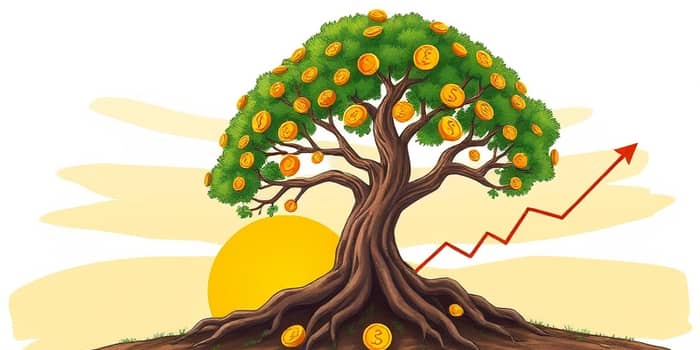
In a world where instant results are celebrated, the idea of waiting for years to see significant investment gains can feel counterintuitive. Yet history consistently shows that a measured, disciplined approach to building wealth pays dividends in the long run.
By embracing the virtue of patience, investors tap into the remarkable dynamics of compounding, inflation-beating returns, and reduced volatility. Over decades, small steps compound into monumental achievements, creating lasting wealth through consistent action.
Long-term investing generally means holding assets for at least a decade, aligning capital with major life milestones like retirement, education, or intergenerational legacy. It centers on broad equity markets such as the S&P 500 and global index funds rather than speculative individual stock picks.
This strategy relies on key principles: buy-and-hold discipline, diversified exposure, and time in the market over timing. It shifts focus from daily price swings to the overarching trend of economic growth and corporate profitability.
Examining the S&P 500 total return data across different horizons reveals a compelling narrative. Over time, the nominal and real returns converge toward stable, attractive averages, underscoring the benefits of reinvesting dividends and staying invested through cycles.
Even after adjusting for inflation, long-term real returns in the 6–8% range have been remarkably consistent. These numbers shine when compared to most cash alternatives or fixed-income instruments over equivalent periods.
Compounding is often hailed as the eighth wonder of the world. By reinvesting profits and dividends, an investor’s gains generate their own gains, creating an exponential growth loop over decades. A century of total return data shows a staggering gap between price-only and dividend-inclusive performance.
For instance, over the past 100 years, the S&P 500 delivered about 10.46% annualized with dividends versus just 6.51% without. In real terms, those figures become 7.28% and 3.44%, respectively. This demonstrates why reinvestment of dividends is crucial for lasting wealth accumulation.
A simple rule of 72 illustrates the power: at a 7% annualized real return, an investment doubles roughly every 10 to 11 years. Over a 30-year career, that same investment could multiply eightfold, solely through patient compounding.
Short-term market movements can be volatile, with individual years swinging wildly. However, as horizons lengthen, the odds of positive returns increase dramatically and the range of outcomes narrows—a phenomenon known as volatility compression over decades.
Studies of the S&P 500 show that while daily returns average a modest 0.02%, yearly returns range widely. A one-year hold historically yields a roughly 70% chance of gains. Extend that to five years, and the probability climbs above 90%. Stretch to ten years, and every period studied delivered positive results.
These statistics highlight a powerful truth: your odds improve the longer you stay invested, turning short-term turbulence into long-term order.
Attempting to time markets is akin to predicting tomorrow’s weather with perfect certainty. Market timing often leads to missed gains and emotional whipsaws. One analysis found that missing just the ten best trading days over a 20-year span slashed annual returns by nearly two-thirds.
Big up days often follow big downturns, making it nearly impossible to re-enter at the ideal moment. As one advisor noted, big up days after downs are hard to predict, penalizing anyone out of the market when rebounds occur.
True patience in investing isn’t passive; it’s an active commitment to a long-term vision. It requires emotional resilience to withstand sharp pullbacks and unwavering focus on objectives that may be years or decades away.
Cultivating this mindset often involves setting predefined rules, such as automatic contributions, periodic portfolio rebalancing, and objective criteria for evaluating performance. By removing ad hoc decisions, investors minimize the impact of fear and greed.
Moving from theory to action starts with small but decisive steps. Here are practical guidelines to anchor your journey:
By institutionalizing these habits, you build a framework that supports time in the market over timing the market, reducing emotional interference and harnessing compounding effects.
Ultimately, the journey to lasting wealth is not a sprint but a marathon. It demands faith in market fundamentals, discipline in contributions, and confidence to weather inevitable storms. Those who embrace patience discover that the greatest rewards often accrue to the steadfast, enabling financial freedom and peace of mind.
Remember, every great financial success story began with consistent decisions made over many seasons. Start today, stay committed, and let time be your greatest ally in building enduring prosperity.
References